
 0
0


- Home
- Blog
- Product Insights
- Complete Guide to Drawer Slides: Types, Sizes, and Selection Tips
Complete Guide to Drawer Slides: Types, Sizes, and Selection Tips
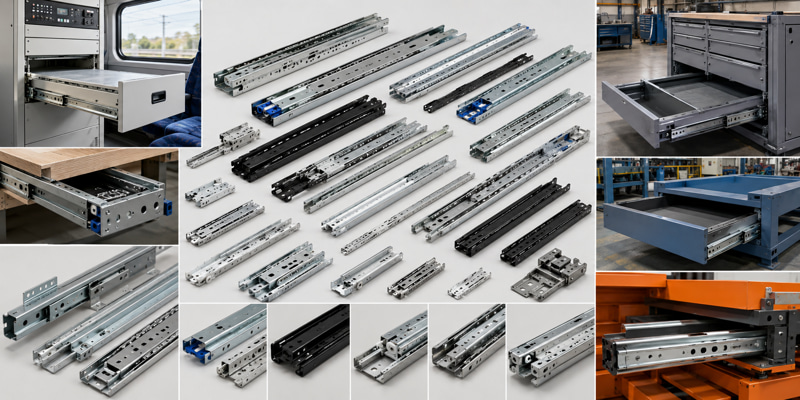
There are many drawer slide specifications on the market, but what corporate procurement teams or factories are usually concerned about is not model differences, but unstable supply or inconsistent quality between batches. As long as delivery times are disrupted or quality varies, it can affect production schedules and assembly efficiency, potentially leading to customer complaints or rework costs later on. This article quickly summarizes the characteristics of various slides, common usage scenarios, and key points to note when choosing sizes, allowing you to grasp key differences during the procurement or design phase to avoid subsequent issues such as insufficient load capacity or increased costs.
Different Types of Household Drawer Slides
In general home or commercial furniture design, how to choose and install drawer slides directly affects the smoothness of the drawer. Choosing the right slides not only makes operation smoother but also significantly improves the overall user experience. Common drawer slides can be roughly divided into the following types:
Undermount Drawer Slides
Undermount drawer slides are a design installed at the bottom of the drawer, where the metal tracks are not visible from the outside, making the overall look cleaner and more modern. High-end custom kitchen cabinets and bathroom vanities often specify this type of concealed slide.
However, these drawer slides require high installation precision. If the cabinet's level or dimensional tolerances are not handled well, it can easily affect the smoothness of the sliding or cause the soft-close function to operate roughly or fail. During construction or assembly, more careful alignment is needed to maintain a stable user experience.
Side-Mount Drawer Slides
Side-mount drawer slides are installed on both sides of the drawer and cabinet. When the drawer is opened, you will directly see the slide hardware itself. This type of drawer slide has a simple structure and is easy to install, making it a highly durable style commonly used in kitchen drawers, office furniture, or tool cabinets.
It should be noted that side-mount drawer slides require side installation clearance, generally 12.7 mm (1/2") per side, but the actual requirement depends on the specific model specifications. If the reserved size is incorrect, it can easily affect the smoothness of the pull or the installation alignment.
Center Mount Drawer Slides
Center mount drawer slides are less common; they are a slide design installed in the center of the drawer bottom. Because there is only one support point in the middle, the overall load-bearing capacity is usually not high, making them more suitable for lightweight items. This type of slide is mostly used in light furniture or some traditional woodwork drawer designs. If used for heavier storage needs, stability will be more limited.
Soft-Close Drawer Slides
Soft-close drawer slides feature a built-in damping design, where the drawer automatically decelerates during the last short distance of closing and slowly retracts, preventing it from slamming shut with a bang. These drawer slides are quieter and smoother to use, and they also prevent items inside from shifting due to impact. Over long-term use, they also reduce wear on hardware components, leading to better overall durability.
When to Use Heavy-Duty Drawer Slides
Commonly seen drawer slides have a load capacity of about 20 to 55 kg, which are suitable for kitchen storage, wardrobe drawers, or commercial storage. However, if the usage scenario is heavier—such as long-term load-bearing, frequent opening and closing, or storing heavier items—it is recommended to switch to heavy-duty drawer slides. These slides feature reinforced structures and ball-bearing designs for more stable operation and greater durability. They are generally used for higher-load industrial or commercial applications depending on the extension length and installation conditions. In practical applications, common examples include commercial kitchen equipment, large pull-out storage racks, tool carts and garage workbenches, RV conversions and vehicle storage systems, and office filing cabinets that need to store large volumes of documents.
〈Recommended Products: Heavy duty drawer slides〉
How to Size Your Drawer Slides
To ensure drawers pull smoothly without sticking or misalignment, the key lies in getting the sizing right. Many people choose drawer slides based only on appearance or price, but if the size is incorrect, problems will arise regardless of how they are installed. Before purchasing, it is recommended to first confirm these key points:
Step 1: Measure the drawer and cabinet depth
First, measure the length of the drawer itself and the internal depth of the cabinet. Basically, the length of the drawer slides should be close to the drawer length; meanwhile, ensure there is enough space in the cabinet to install the slides, preventing them from getting stuck or failing to extend fully after installation.
Step 2: Check installation clearance
If using side-mount slides, space must be reserved on both sides of the drawer, with a clearance of approximately 0.5 inches (1.27 cm) per side to allow the slides sufficient room to operate.
The clearance should not be too tight or too loose. If it is too tight, resistance during sliding will increase, making it feel stuck; if it is too loose, the drawer will wobble easily, which can lead to faster wear of the components over time. Therefore, whether the installation tolerances are accurately maintained will directly affect the smoothness of the drawer slides, as well as the overall stability and durability.
Step 3: Choose the extension type
-
3/4 Extension: It can only extend about 75%, making it suitable for cabinets with limited space.
-
Full Extension: The drawer can be pulled out completely, allowing items inside to be seen at a glance and accessed more easily; it is currently the most common style.
-
Over-Travel: The drawer can extend slightly beyond the cabinet, ensuring even the items at the very back are fully accessible, which is ideal for designs requiring full visibility or deep storage.
Simple Maintenance for Drawer Slides
Good drawer slides usually do not require much special maintenance, but there are a few small details to note during installation and daily use that can make drawer operation more stable and more durable.
Proper Alignment During Installation
When installing drawer slides, it is recommended to first use a level or simple tools to confirm whether the slides on both sides are aligned and whether they remain parallel. Many sticking and noise issues stem from cabinet deformation or rail misalignment. 80% of drawer slide issues actually come from installation conditions, not the slide itself.
Keep the Track Clean
If wood chips, dust, or construction debris fall into the drawer slide tracks, it can easily affect the sliding, making the drawer feel stuck or even causing uneven movement. It is recommended to simply wipe it down and remove any foreign objects whenever you notice dirt. Additionally, try to keep the environment dry to avoid long-term accumulation of moisture or dust. Over time, this can easily affect smoothness and shorten the service life.
Don’t Exceed the Weight Limit
Every model of drawer slide has a weight capacity limit; try not to place items that exceed the load during use. If used under excessive load for a long time, the slides may gradually deform, affecting smoothness and shortening the service life.
Drawer Slides FAQs
What’s the difference between side-mount and undermount drawer slides?
Side-mount drawer slides are designed to be installed on both sides of the drawer, making the hardware visible from the outside. They usually have a higher load capacity and more affordable pricing, and are commonly used in general furniture or industrial applications. Undermount drawer slides are installed at the bottom of the drawer, providing a cleaner and simpler visual appearance. They are often used in high-design furniture or high-end cabinetry, making them suitable for scenarios where appearance and tactile feel are prioritized.
How do you choose the right load capacity for drawer slides?
For general household kitchen drawers, general furniture storage, and other daily uses, selecting standard slides of about 45 kg is sufficient. However, if used in commercial vehicle equipment drawers, train control cabinets, or industrial equipment cabinets, due to frequent use and heavier loads, it is recommended to choose heavy-duty slides of 68 kg or more, which will be safer and more durable.
Additionally, when selecting a model, pay attention to static load capacity and dynamic load capacity. Static refers to the weight the drawer can bear when stationary, while dynamic refers to the load condition during actual pulling and pushing. Since actual use involves constant opening and closing, industrial applications place more importance on dynamic load data, as it is closer to actual conditions than looking at static figures alone.
Are steel ball-bearing slides better than plastic roller slides?
Steel ball-bearing slides generally perform better than plastic roller slides, especially in cases of high-frequency use, larger loads, or when full-extension is required. Ball-bearing slides offer better lateral stability and durability, and are less likely to loosen or wear out over long-term use.
In contrast, plastic roller slides have a simpler structure and are typically used for lightweight furniture, such as standard wardrobes or small storage drawers. If the frequency of use is low, the weight is minimal, and budget is a consideration, these types of slides are sufficient to meet basic needs.
Why Sun Chain Is Your Top Choice for Reliable Drawer Slides
In the highly competitive furniture and hardware market, Sun Chain has focused on the R&D and manufacturing of drawer slides since its establishment in 1975, with long-term experience supporting OEM and industrial applications worldwide. With a complete product line ranging from undermount to soft-close slides commonly used in high-end kitchenware to heavy-duty industrial slides, we can meet the needs of various projects.
On the manufacturing side, Sun Chain centers its operations at its Taiwan manufacturing base, utilizing in-house roll-forming and stamping production models to control quality right from the start of the process. Simultaneously, we have implemented an MES smart manufacturing system paired with QR code mold management to ensure more precise mold and production traceability.
For quality management, we use a golden sample QC system as the standard benchmark, maintaining the stable performance of every batch of drawer slides through AOI (Automated Optical Inspection) and durability testing. Because we have comprehensive control systems from manufacturing to inspection, we not only ensure stable supply but also reduce the risk of subsequent customer complaints, providing greater security for long-term partners or high-volume purchasers.
Conclusion
The choice of drawer slides directly affects the smoothness of operation and overall durability. From standard residential undermount slides to industrial heavy-duty slides, as long as dimensions, load requirements, and installation space are confirmed at the start, subsequent use is typically stable and less prone to issues. Are you looking for a reliable and quality supplier? Sun Chain can provide engineering support, evaluations and customized project consultation, along with tailored load solutions and OEM project support, helping you develop drawer slide systems that better fit your actual application requirements. Contact us now to learn more.


Sun Chain
Sun Chain is a Taiwan-based solution provider with two factories specializing in furniture & building hardware and sliding systems, including industrial and super heavy-duty slides.


Article Classification
Recent Articles
- Are Kitchen Pull-Out Baskets Worth It? Ultimate Guide to Uses and Selection Tips
- Base Cabinet Pull-Out: The Hidden Upgrade Behind Modern Kitchen Storage
- The Applications of Heavy-Duty Lockable Drawer Slides for a Safer Workspace!
- What Are Telescopic Slides? The Ultimate Guide to Types, Capacities, and Applications
- How to Choose and Maintain Pull-Out Wine Racks for Your Collection