
 0


- Home
- Blog
- Applications
- Steel vs. Aluminum Telescopic Slides: Which Material Fits Your Application?
Steel vs. Aluminum Telescopic Slides: Which Material Fits Your Application?
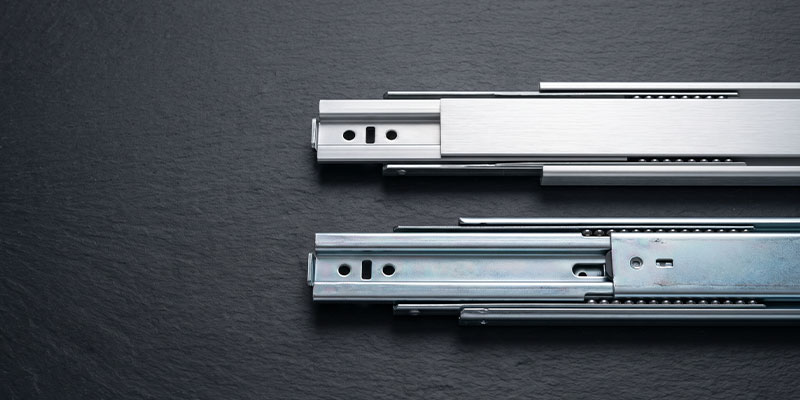
When selecting telescopic slides, should you choose steel for strength or aluminum for lightweight performance?
The answer depends on more than the material itself.
Telescopic slides are used in a wide range of applications, from furniture and industrial equipment to commercial vehicles and mobile storage systems. While steel and aluminum can both be used in sliding mechanisms, their material properties influence how a slide is designed, installed, and expected to perform.
Choosing the right material requires balancing load capacity, weight, structural stability, operating environment, and overall system cost.
Steel Telescopic Slides: Strength and Structural Stability
Steel is widely used in telescopic slides because of its strength, stiffness, and suitability for load-bearing applications. Depending on the slide design, steel slides can provide reliable support for equipment drawers, tool storage systems, industrial machinery, and other applications requiring structural stability.
Key Advantages of Steel Slides
High Load-Bearing Potential
Steel offers high strength and stiffness, making it suitable for applications where substantial loads must be supported. However, the actual load rating depends on the slide’s profile, material thickness, extension length, mounting configuration, and overall construction—not simply whether the slide is made of steel.
Structural Rigidity
Steel’s relatively high stiffness helps limit deflection under load. This can be important for long-extension slides, equipment drawers, and applications where excessive movement or misalignment may affect operation.
Versatility Across Applications
Steel slides are commonly used in furniture, tool cabinets, industrial storage, machinery, and vehicle equipment systems. Different steel grades and surface treatments can also be selected to meet specific performance requirements.
What Should Be Considered?
Steel has a higher density than aluminum, which can increase component weight. Carbon steel also requires suitable surface protection when used in environments where moisture or corrosive substances may be present. For applications where weight reduction is a major design objective, aluminum may be worth evaluating.
Aluminum Telescopic Slides: Lightweight Design and Application Flexibility
Aluminum is often considered when reducing component weight is important. Its lower density makes it attractive for mobile equipment, recreational vehicles, specialized storage systems, and applications where overall system weight influences product design.
Key Advantages of Aluminum Slides
Lower Material Weight
Aluminum has approximately one-third the density of steel. This provides opportunities to reduce component weight, although the actual weight difference between finished slides depends on their profiles, dimensions, and construction.
Natural Corrosion Resistance
Aluminum forms a protective oxide layer that helps resist corrosion in many environments. Additional treatments, such as anodizing, may be used to improve selected surface properties. However, aluminum is not immune to corrosion, particularly in aggressive environments or where dissimilar metals create galvanic corrosion risks.
Design Flexibility
Aluminum extrusion allows manufacturers to develop different profile shapes and integrate functional features into a component. This can be useful when slide geometry, weight, and installation space need to be considered together.
What Should Be Considered?
Aluminum generally has lower stiffness than steel, so profile design becomes especially important when controlling deflection under load. Load capacity, wear resistance, bearing design, and durability must be evaluated based on the complete slide assembly. An aluminum slide should not be assumed to have a lower or higher load capacity solely because of its material.
Steel vs. Aluminum: Key Factors to Compare
Material selection should begin with the requirements of the complete application rather than a single specification.
| Selection Factor | Steel Telescopic Slides | Aluminum Telescopic Slides |
| Load Capacity | Strong potential for demanding load-bearing designs | Depends on profile design and reinforcement |
| Component Weight | Higher material density | Lower material density |
| Structural Stiffness | Higher stiffness, helping control deflection | Lower stiffness; geometry is especially important |
| Corrosion Resistance | Depends on steel grade and surface treatment | Natural oxide protection; additional treatment may be required |
| Design Flexibility | Suitable for formed and assembled profiles | Extrusion enables customized profile geometries |
| Cost | Depends on material grade, processing, coating, and volume | Depends on alloy, extrusion, machining, finishing, and volume |
Neither material is automatically better in every category. The final performance depends on the complete slide design.
Matching Slide Materials to Different Applications
Industrial Equipment and Heavy-Duty Storage
Industrial drawers, tool cabinets, and equipment systems may require high load capacity, structural stiffness, and resistance to deflection. Steel slides are often a practical starting point for these applications. The final selection should also account for extension length, mounting arrangement, vibration, and expected operating cycles.
Recreational Vehicles and Mobile Equipment
In recreational vehicles and mobile systems, weight reduction may be an important design consideration. Aluminum slides can be evaluated where reducing component weight supports the overall vehicle design. However, load requirements, vibration, mounting stability, and operating durability remain essential.
Furniture and Interior Storage
Both steel and aluminum slides may be suitable for furniture and interior storage systems. The choice depends on load requirements, available installation space, desired appearance, motion performance, and cost targets.
Humid or Corrosive Environments
For applications exposed to moisture, humidity, or corrosive substances, material selection should consider the complete corrosion protection strategy. Aluminum’s natural oxide layer, coated carbon steel, and stainless steel each offer different characteristics. The appropriate choice depends on the actual environment, component design, and required validation.
Beyond Material: What Really Determines Slide Performance?
Although material selection is important, it is only one part of telescopic slide engineering. Before finalizing a slide specification, consider:
• Load Requirements: Rated load, load distribution, and safety considerations
• Extension Length: Required travel and deflection under load
• Mounting Configuration: Side mounting, flat mounting, and structural support
• Operating Conditions: Frequency of use, vibration, shock, and environmental exposure
• Corrosion Protection: Material grade, coating, and surface treatment requirements
• Total Cost: Material, manufacturing, finishing, installation, and maintenance considerations
A well-designed steel slide may be the better solution for one application, while a carefully engineered aluminum slide may offer greater value in another.
The right decision is not simply steel versus aluminum. It is choosing the slide system that meets the application’s actual requirements.
Find the Right Telescopic Slide Solution with SUNCHAIN
At SUNCHAIN, we understand that different applications require different combinations of strength, weight, corrosion protection, and motion performance.
Whether you are developing industrial equipment, vehicle storage, or specialized sliding systems, selecting the appropriate telescopic slide begins with understanding how the product will be used.
Looking for the right slide solution for your application?
Contact SUNCHAIN to discuss your load requirements, installation conditions, operating environment, and product specifications.


Sun Chain
Sun Chain is a Taiwan-based solution provider with two factories specializing in furniture & building hardware and sliding systems, including industrial and super heavy-duty slides.

Article Classification
Recent Articles
- Steel vs. Aluminum Telescopic Slides: Which Material Fits Your Application?
- One Vehicle, Different Requirements: Choosing the Right Slide Finish
- How a Spice Rack Pull Out Transforms Your Kitchen Storage and Maximizes Space
- Pull Out Cabinet Organizer: How to Maximize Every Inch of Cabinet Space
- The Practicality and Convenience of Corner Pantry Lazy Susans